Neither the Same nor Another
If there is no soul, what gets reborn? Buddhism gave two answers. The second is deeply strange.

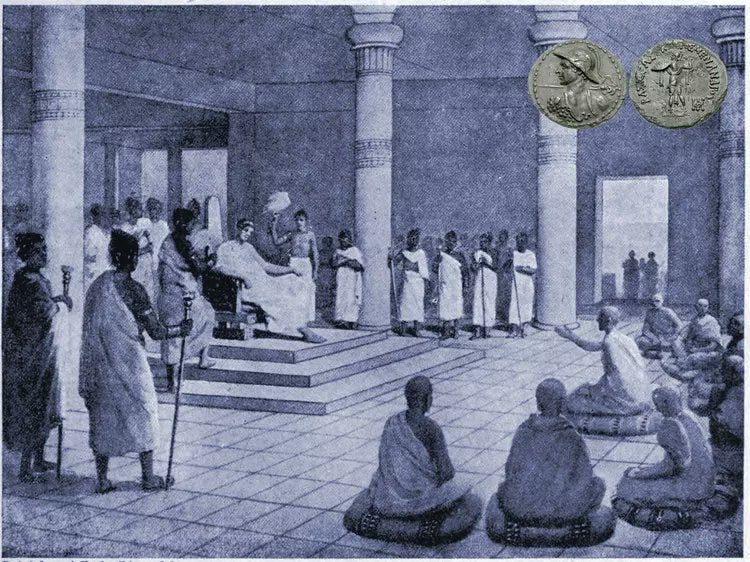
Picture the scene. It is around 150 BCE, on the hot northwestern edge of the Indian world, and a Greek king is looking for a fight. Not with armies, he has plenty of those, but with words. His name is Menander, he rules Bactria and the Punjab, and the Buddhist texts that remember him call him Milinda. They do not remember him as a pushover. He is, they say, hard to equal in argument and harder still to beat, the acknowledged better of every school’s founder he has ever debated. He collects sages the way other kings collect elephants, and he has worn most of them out.
Then he meets a monk named Nāgasena, and he asks the question he has presumably been asking everyone. Buddhism teaches that there is no soul. Fine. So when you die and are reborn, what exactly is reborn? If nothing permanent crosses over, in what sense is the next life yours? And here is the sting in the tail: why should anyone carry the karmic bill for what some vanished stranger did?
It is a genuinely good question, the kind that does not go away when you wave your hand at it. And the Buddhist tradition, to its enormous credit, did not wave its hand. It sat with the problem for centuries and came back with two answers. The first is older and more orderly. The second is from Nāgārjuna, and it is the stranger of the two by a wide margin. I want to give both of them their fair hearing, and, in passing, say that I side with neither.
Why it is a hard question
Start with what is actually being denied, because the whole drama depends on it.
The picture Buddhism throws out is the one the Bhagavad Gītā had painted so beautifully just up the road. There, Krishna comforts a panicking Arjuna by telling him the self cannot really be killed. It simply changes bodies the way you change clothes. In Gita, the self, “after casting away worn out garments,” picks up fresh ones, and so it slips from a worn body into a new one and carries on. The bodies are disposable. The self is the thing that lasts. That self is the soul doing precisely what a soul is for: stringing your lives together like beads on a single thread, so that the one who acts and the one who pays are obviously the same.
Buddhism pulls out the thread. There is no bead holder. No ātman, no little permanent you sitting behind your eyes and owning the show.
And the moment you remove it, Menander’s question turns sharp. With a soul, rebirth was easy and so was fairness: the same self that acted is the one who later reaps. Take the self away and you have a real mess on your hands. If nobody owns my karma, what stops me from waking up next time stuck with a stranger’s debts, or a stranger from waking up with mine?
You might think the secular modern move is to keep Buddhism’s kindness and quietly drop the rebirth part, treating it as a poetic metaphor. German philosopher and Madhyamaka scholar Jan Westerhoff points out a snag here. The whole goal of the Buddhist path is nirvāṇa, the final end of craving and suffering, the candle of the restless self finally blown out. Now suppose there is no rebirth, and death is simply the lights going out for good. Then death already delivers that final end, automatically, to absolutely everyone. The saint who meditated for forty years and the man who never gave it a thought get the exact same total extinction the moment they die. If that were true, the entire long effort of the path would buy you nothing you were not going to get for free anyway. That is why the tradition never took the cheap exit. It held on to both rebirth and no soul at once, and rolled up its sleeves to make sense of the pair.
The first answer: the Abhidharma
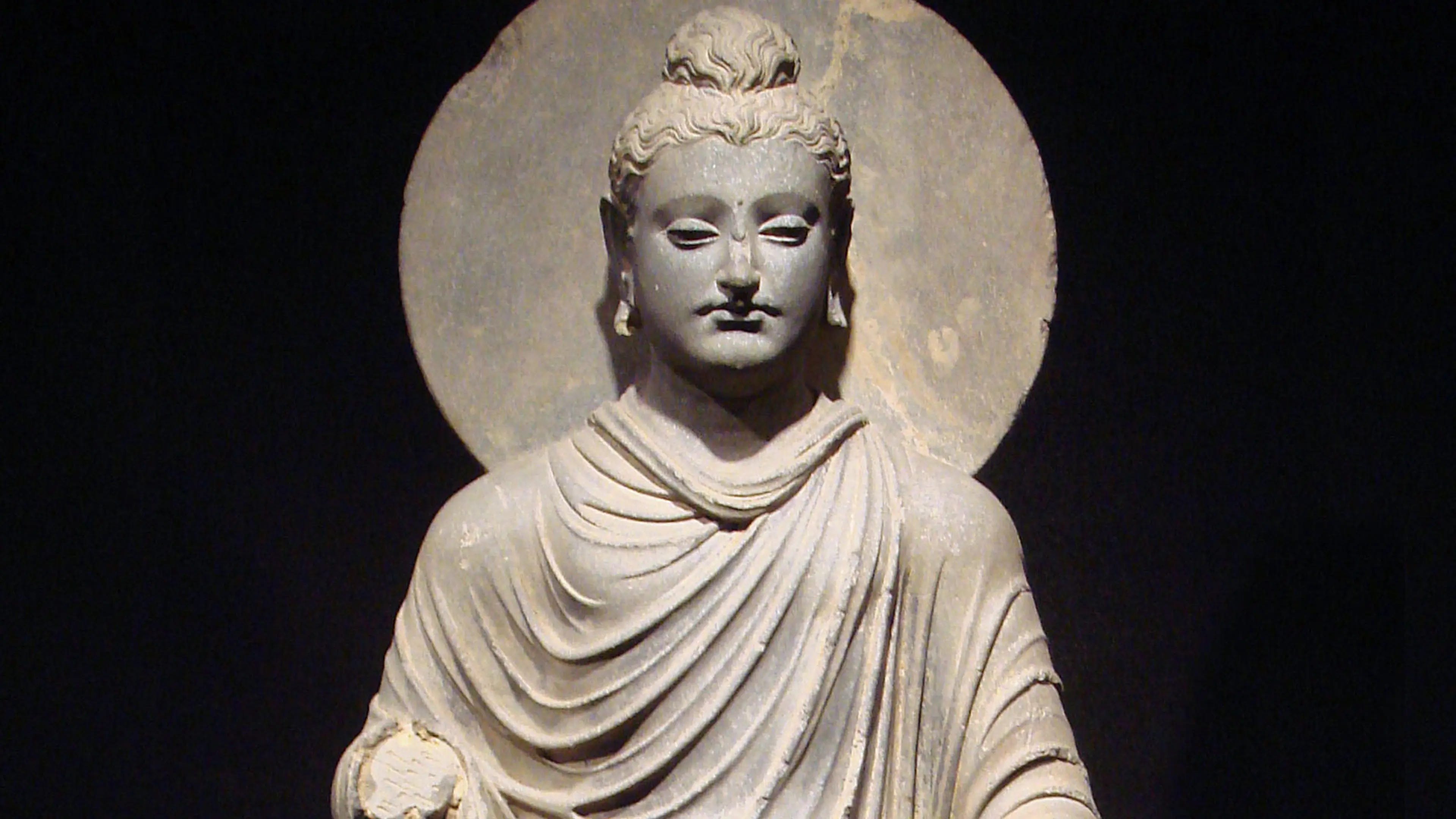
The first answer comes from the Abhidharma. A quick word on what that is, because the name will keep coming up. The early Buddhist scriptures were gathered into three great collections, traditionally called the “three baskets.” One basket holds the rules for monks. One holds the Buddha’s discourses, his teachings more or less as he spoke them, full of stories and parables. The third basket is the Abhidharma, the analytical one. It is the tradition’s attempt to take those loose, story shaped teachings and reorganize them into a rigorous system, breaking the whole blur of experience down into its smallest moving parts and charting how each part hands off to the next. If the discourses are the Buddha talking, the Abhidharma is the tradition doing the homework.
So what are you, on this view? Not a soul, but a pudgala. The word just means “person,” but the Abhidharma loads it with a particular claim: it names you as a process rather than a thing. What truly exists, the Abhidharma says, are countless fleeting events called dharmas. A dharma is the smallest real flicker of experience: a single moment of seeing, a flash of warmth, one passing impulse of the mind. We bundle these flickers, out of habit and convenience, into five “heaps” called skandhas, one heap of physical stuff and four of mind. Nobody owns the bundle. Nobody stands on top of it. The pieces arise, do their bit, and pass, each one nudging the next into being.
Holding it all up is a single stubborn principle: the parts are real, the whole is just a handy name. This is the chariot Nāgasena famously parks in front of King Milinda. Where, he asks, is the “chariot”? Is it the pole? The axle? The wheels, the frame, the ropes, the yoke, the spokes, the goad? None of those is the chariot, and there is no extra “chariot” floating above them. “Chariot” is simply the word we reach for when those parts are arranged chariot wise. And you, says Nāgasena, are exactly the same. Real parts, doing their thing, and over them no owner, only a name.
It is worth slowing down on what these parts actually are, because the cartoon version gets it wrong. It is tempting to imagine the Abhidharma swapping out the soul for a swarm of tiny mind atoms, little solid beads rattling along in a line. The scholar Noa Ronkin makes the case that the early Pali material is better read as a world of processes and events than of little substances. The person, she writes, is “but the sum total of the processes” that make her up, a string of momentary happenings with nothing solid underneath. The parts, in other words, are more like verbs than nouns. Dig down as far as you like and you never reach solid ground, only more happening.
Which lands us right back on the hard question. If you are just a stream of ownerless flickers, what makes the stream a single stream, and what keeps your karma stuck to you? Since Menander is a king and not a graduate student, Nāgasena answers in pictures.
First, a flame. A lamp burns all night. Is the flame at dawn the same flame that was lit at dusk? No. A totally different flame? Also no. It is one continuous burning, “neither the same nor another,” in the lovely Pali phrase na ca so na ca añño. That, says Nāgasena, is you, down the length of a life and across the gap of death. Not one frozen thing hanging on, and not a parade of unrelated strangers, but a single fire passing itself forward.
Second, and this one answers the fairness worry head on, a man lights a fire in the cold season to warm his hands, then strolls off and leaves it crackling. It jumps to a neighbour’s field and burns it down. Dragged in front of the magistrate, he pleads that the fire that ate the field was not his fire, the cozy little one he lit. Nāgasena is not having it. The chain of cause runs unbroken from his match to the ruined crop, and that chain is enough to pin it on him. He runs the same play with a mango thief who cannot disown the ripe fruit grown from the pit he stole, and with milk thickening into curds and then butter, continuous through every change without being the same at any two moments.
There is the first answer, whole. No soul travels. What ties your lives together is a rope of causes, fire lighting fire, milk turning to curd, each instant handing itself to the next. And here is the part to hold on to: for the Abhidharma that rope is really there. It is the bedrock under everything. In principle you could follow it knot by knot.
The later technical literature spells the machinery out with almost alarming precision. In the Paṭṭhāna, the Abhidharma’s great manual of conditions, continuity runs on what are called the proximity conditions: each moment of consciousness, as it dies, cues up the very next “without any pause.” Ronkin notes these relations “were probably necessary in order to account for the continuity of phenomena without relying on any metaphysical substance.” The same seamless handoff connects the last flicker of a dying mind to the first flicker of the next life. Rebirth is not a soul catching the next bus. It is simply the final moment of one life cueing the first moment of the next, the same way one thought cues the next over breakfast. And karma is an act of will that has long since ceased but left traces in the stream, traces that ripen when the conditions are right, sometimes lifetimes later. No self is keeping the account. The unbroken chain of causes does everything a soul used to do.
It is a powerful solution. It dissolves the self and still explains why you wake up tomorrow as the same person, and why your actions keep following you from one life to the next. Just keep one thing in view, because the second answer goes straight for it: the rope is real.
Nāgārjuna
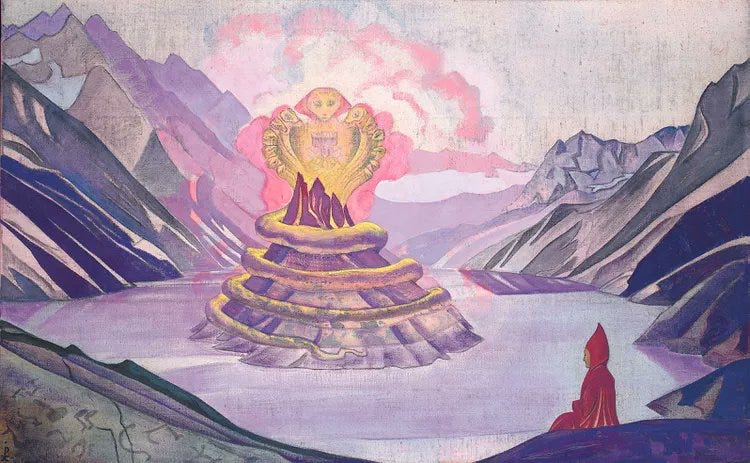
Before the second answer, a word about the man, because he is no minor figure. Nāgārjuna lived around the second century CE, likely in South India(modern day Andhra Pradesh or Telangana), and he is a strong candidate for the most important Buddhist thinker after the Buddha himself. He founded the Madhyamaka, the “middle way” school, and whole traditions of later Buddhism across Tibet, China, and beyond trace their philosophy back through him. His central idea, the one everything else hangs from, is śūnyatā, usually translated “emptiness.” It is the claim that nothing whatsoever exists on its own, in and of itself. Everything is what it is only by leaning on other things, all the way down. He argues this with a patient, almost dizzying logic that pulls the rug out from under one comfortable assumption after another, and now it is rebirth’s turn.
The second answer: emptiness
In a short verse text traditionally pinned to him, the Pratītyasamutpādahṛdaya, the “Heart of Dependent Origination,” Nāgārjuna reaches for a handful of everyday images, and you have to watch them closely because each is a small trap. A teacher recites a verse and the student learns it. A seal presses into soft wax and lifts away, leaving its crest behind. You hear the word for a sour fruit and your mouth floods.
Look hard at any one of them. Something real plainly happens, an effect genuinely shows up, and yet nothing actually makes the trip across. The teacher does not lose the verse when the student gains it; no little parcel of poetry leaps from skull to skull. The verse just arises again, fresh, in the student. No metal crosses from the seal into the wax; only the shape turns up there. No sourness travels from the word onto your tongue; there is only a sound in the air, and still the saliva comes. Cause, then effect, reliably, with nobody and nothing in the seat between them.
Nāgārjuna takes this all the way to the edge. The verses say it without blinking: the five skandhas, the very stuff the person was made of, do not travel onward. Not so much as an atom passes from this life to the next. The next life is genuinely other than this one. What carries over, to steal Westerhoff’s neat modern phrase, is closer to information than to any thing or substance, a pattern that repeats rather than a passenger that rides.
On the surface this can read like the Abhidharma with the dial cranked up. Both deny the soul. Both lean on lamps and seeds and continuity without identity. But here is the one spot where they split, and it is a chasm.
For the Abhidharma, the rope of causes between your lives is really there, a true thread you could trace knot by knot. Nāgārjuna looks at that rope and says it has no svabhāva. The word is the hinge of his whole philosophy, so it is worth getting right. Svabhāva means “own being” or “self nature”: the property of existing in your own right, from your own side, without leaning on anything else to be what you are. A thing with svabhāva would be self contained, standing on its own feet, needing nobody’s permission to exist. Nāgārjuna’s signature move is to say that nothing at all has it. The rope of causes is real only the way “a river” is real: a useful name for water that is never the same twice, with no “river itself” tucked underneath. The Abhidharma had already dissolved the self into a stream of causes. Nāgārjuna turns around and dissolves the stream.
Sit with how far that reaches. What is left is rebirth as a pattern that keeps reassembling, with no soul to carry it and no solid rope beneath it either. Just one moment leaning on the next, dependence all the way down, and no floor at the bottom of the staircase.
Where they actually disagree
It would be easy to leave it there, as a tidy face off: Abhidharma keeps the rope, Nāgārjuna burns it. That is roughly right, and it is the version I have told before. But there is a sharper truth underneath, and it actually makes the quarrel more interesting rather than less.
The trick is that svabhāva, “own nature,” did not mean the same thing to everybody. Nāgārjuna’s real target is narrower than “the Abhidharma” in general.
One northern school, the Sarvāstivāda, used the word at full strength. To have a svabhāva, for them, was to be a dravya, a genuine substance, a real little thing with its own intrinsic nature, so real that the Sarvāstivādins were willing to say such things exist in the past and future as well as the present. That is a properly solid, substance heavy picture, and it is exactly the thing Nāgārjuna spends his life taking apart. When he says nothing has svabhāva, this beefed up, stands on its own kind of dharma is who he is talking to.
The southern Theravāda, whose canon we have been quoting all along, meant something much humbler by the word. There, sabhāva just tells you what a given dharma is, what makes it different from the others, without claiming it exists independently from its own side. In Ronkin’s crisp formulation, it “determines what a dhamma is and not that a dhamma is.” They allowed only fleeting present dharmas and politely declined to turn a dharma into a substance.
Why should you care? Because it tells you what the fight is really over. It is not quite “the Abhidharma believes in a real thread and Nāgārjuna says it is empty,” full stop. It is that the substance loving wing of the Abhidharma had handed the building blocks of the causal stream their own private reality, and Nāgārjuna’s emptiness is the claim that nothing gets that, not the self, not the parts, not even the causal link tying them together. No exemptions. You borrow your being from whatever holds you up, and that thing borrows from whatever holds it up, and so on forever, with no one in the chain ever actually owning the stuff. Dependence is the whole of the story.
What neither answer settles
The honest thing to admit is that neither answer ties off cleanly, and the tradition knew it perfectly well.
Lean on the Abhidharma and you can ask whether its real, karma toting causal stream is just the banished soul wearing a fake moustache. If something hangs together firmly enough to keep my karma reliably mine and to convict the field burner, how far is that, really, from a thin little self slipped back in through the side door under a more respectable name?
Lean on Nāgārjuna and the worry flips. If the link between my lives is only a convention with no nature of its own, what keeps karma lawful instead of random? Why does the pattern keep snapping back into focus as me, with my debts attached, instead of fraying into static or reassembling as somebody else? “Dependence all the way down” is dizzying, and the dizziness is precisely the objection.
Eighteen centuries later, neither side has blinked. That is half the reason the debate is worth your evening. This is not a museum piece behind glass. It is two of the most serious attempts anyone has ever made to explain how a person can keep going with nobody home at the center, and the two are still arguing.
Where it leaves us
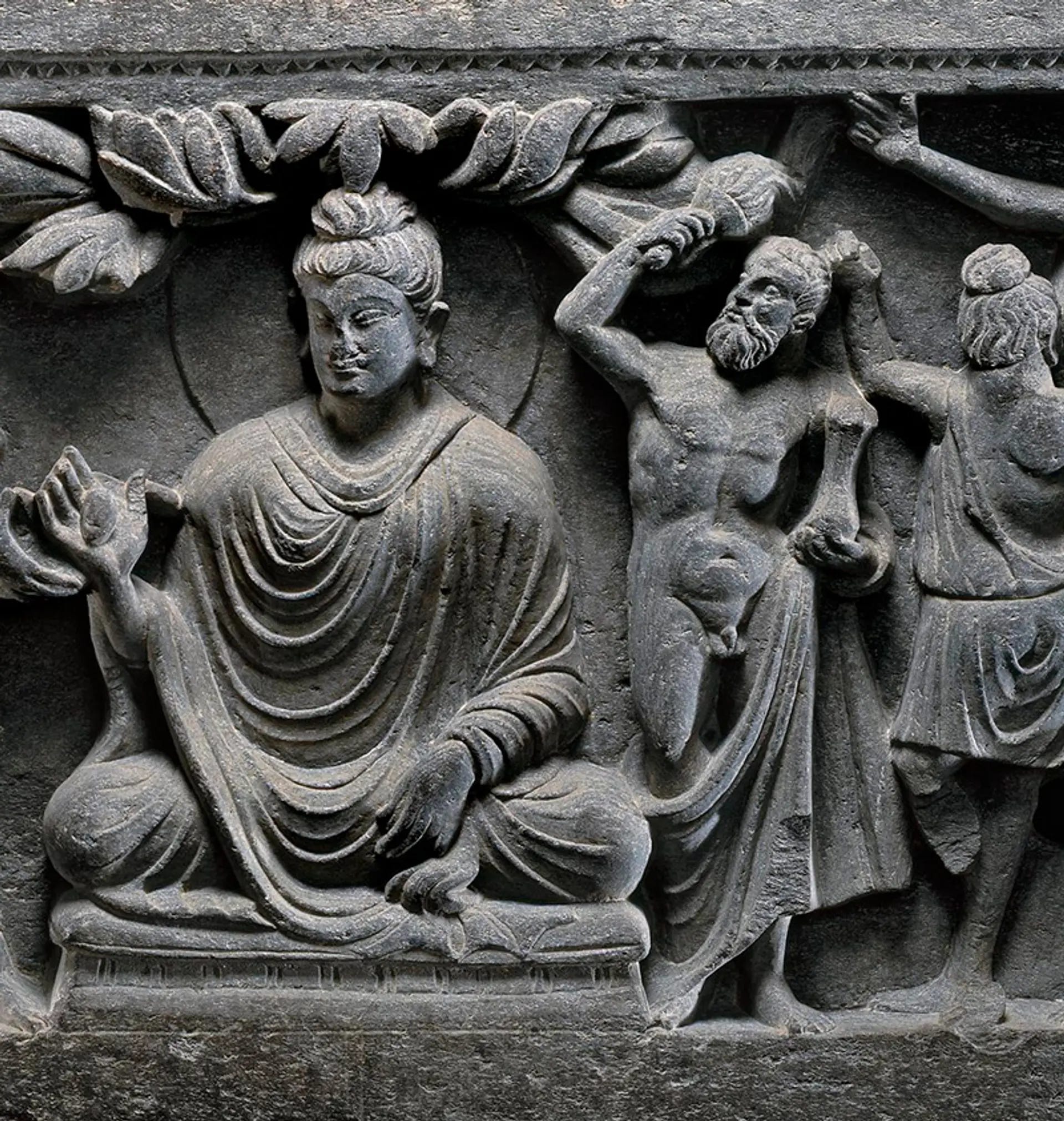
Two answers, one question, and the same refusal at the root of both. Each denies the soul. The entire distance between them comes down to a single thing: how real is the thread between one life and the next. The Abhidharma keeps the thread, and builds a gorgeous clockwork of momentary causes to carry you over the gap. Nāgārjuna says the thread itself is empty, that there is leaning and nothing underneath the leaning, and that somehow, even so, you still open your eyes on the far side.
For what it is worth, my own sympathies lie with neither, but with the Viśiṣṭādvaita of Rāmānuja, which keeps the self real and eternal. That is an argument for another day, and these two have earned a hearing on their own terms.
A Greek king asked the question on a dusty frontier two thousand years ago and could not get a straight answer he was happy with. The fact that we are still chewing on it is the surest sign he asked a very good one.
Sources and further reading
The dialogue itself. The Milindapañha, translated by T. W. Rhys Davids as The Questions of King Milinda (Sacred Books of the East, 1890). This is where the flame, the burning field, the mango, the milk, and the chariot all come from. Free to read at the Internet Sacred Text Archive.
Nāgārjuna’s answer. The Pratītyasamutpādahṛdaya, the “Heart of Dependent Origination,” with the seal, teacher, and sour word similes. Studied by Carmen Dragonetti (1978), who notes the attribution to Nāgārjuna is traditional rather than certain, though Candrakīrti quotes the key verse as his.
The Abhidharma, explained well. Noa Ronkin, Early Buddhist Metaphysics (Routledge, 2005). The source for the “process not substance” reading and the crucial Sarvāstivāda versus Theravāda split over svabhāva.
The two answers, framed. Jan Westerhoff, Nāgārjuna’s Madhyamaka (Oxford, 2009), and his lecture “The Place of Rebirth in Buddhist Philosophy,” which is also where the argument that you cannot simply drop rebirth comes from.
The Gītā line. The “worn out garments” verse is Bhagavad Gītā 2.22, here in Winthrop Sargeant’s The Bhagavad Gītā (SUNY Press).
Original Buddhism did not teach that there was no soul. It denoted what wasn't the soul. What it described is the transmigration of the soul. Or the one and only transmigrant.
Took time to read.
Reincarnation is recorded allover the world.
The flame remembering the flame that lit it is plausible.
A flame recalling sporadic flames from the past, sometimes sequentially, is problematic to soulless Karma.